Hardship does not build character. It reveals what was already there, and removes everything that was only ever borrowed.
The story most people are told about difficult seasons is not this one. The common narrative is constructive: trials make you stronger, suffering builds resilience. The formula about what does not kill you promises something useful will remain. There is enough truth in this to make it feel complete, which is precisely why it obscures the harder thing happening underneath it.
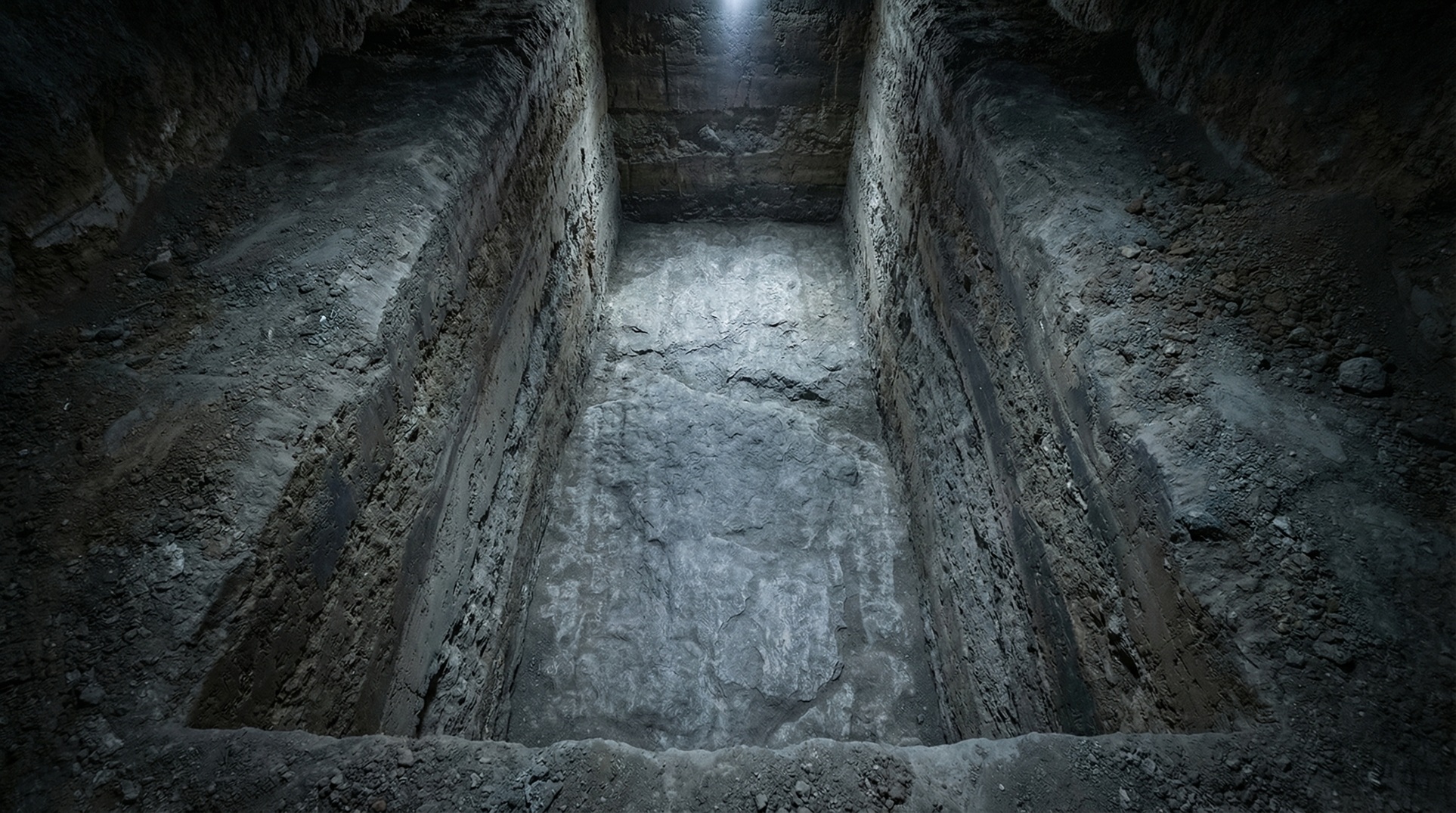
Difficult seasons are not primarily construction projects; they are excavations. They do not add. They strip. Layer by layer, they remove the scaffolding that ordinary life permits you to mistake for your own structure: the people you assumed would stay, the identities that depended on being witnessed. The sense of self that required being carried to remain intact goes with them.
What the excavation finally exposes, at the bottom of the stripping, is either bedrock or hollow ground.
The only way to know which is to stand in it alone, with no one coming, and find out what you are made of when there is nothing left to perform for.
The Audience Disappears First
Before the season takes anything else, it takes the witnesses.
This is the first cruelty of difficult times, and it is the one least anticipated. People expect hardship to test their strength. They do not expect it to quietly empty the room. The departure is rarely dramatic. It is gradual and logical and, from the outside, entirely reasonable: people have their own lives, their own discomfort with sustained suffering that has no clear resolution date. The ones who stay for acute crisis often cannot stay for chronic struggle. Meals arrive in the first week; by the third month the people who brought them frequently are not.
What their departure reveals is a distinction most people had never needed to make before: the difference between people who were present for the person and people who were present for the version of the person that required nothing difficult of them.
The observation is not a judgment on the ones who leave; it is a statement about what proximity had actually meant. Many relationships that felt like deep connection were, on closer examination, arrangements of mutual comfort. They functioned beautifully in ordinary conditions. They were not built for the weight of real difficulty, and the difficulty simply made that visible. The season did not destroy those relationships. It revealed what they had always been.
The hardest part of watching the audience leave is not the loneliness but the inventory that follows: what was held in place by being witnessed, and what remains when the witnessing stops.
What the Witnesses Were Holding
Identity is more external than most people are comfortable admitting.
A significant portion of how a person understands themselves is assembled from reflection. From being seen in particular ways by particular people, from the roles that others' needs assign. The accumulated evidence of how one lands in the world completes the assembly. That is not vanity; it is architecture. People construct their sense of self partly from the inside and partly from the outside, and the outside portion is often larger than it appears until the mirrors are gone.
Difficult seasons remove the mirrors.
The person who understood themselves as capable may find, without an audience to perform capability for, that the capability was partly theater. The person who understood themselves as needed may find that the need was the scaffolding, not the self. Deep roots in a community can turn out to have been social and conditional rather than genuine, once the community stops showing up. None of these discoveries are comfortable. All of them are necessary.
The illusions that sustained the prior self were not lies, exactly. They were structures that ordinary life supported without examination. They held up for years because nothing tested them. The difficult season is the first real test, and what fails under it was always going to fail. The season simply determined when.
What collapses is not the self. It is the borrowed architecture. The distinction matters enormously, though it is nearly impossible to feel in the moment of the collapsing.
The Encounter You Cannot Escape
When the audience is gone and the borrowed architecture has come down, what remains is the encounter most people spend their ordinary lives successfully avoiding: themselves, unmediated, with no performance required and no one arriving to interrupt the silence.
This is what makes solitude during difficult seasons a forge rather than merely an absence. The forge is not comfortable, and it is not supposed to be. It is the condition under which something either holds its form or reveals that it never had one. A person alone with themselves in genuine difficulty, with no rescue incoming and no audience to perform recovery for, faces the precise question that comfortable life permits indefinitely postponing: who are you when there is nothing to be for anyone else?
Most people do not know the answer when they first arrive at that question. The not-knowing is part of the excavation. They discover, in the silence, beliefs they held without knowing they held them. Assumptions about their own fragility or their own durability. The dependencies they had not recognized as dependencies surface only now, because the supply had never been interrupted before. Fears they had managed through busyness and social noise that, in the quiet, cannot be managed that way anymore.
The encounter is not punishment. It is introduction. The person meeting themselves in that stripped condition is meeting, for perhaps the first time, the actual self rather than the performed one. That meeting is the whole point of the season, even when it does not feel like a point, even when it feels like nothing but loss.
What Survives Is Quieter Than Courage
The common expectation of what comes through the difficult season is dramatic: strength, fearlessness, the person who has been through the fire and emerged hardened and unshakeable. This expectation is wrong in a specific way: it is too loud.
What actually survives is quieter.
The mind that emerges is not one without fear but one that has met its fear in the dark and remained functional, which means it no longer has to spend its energy pretending the fear is not there. The spirit is less desperate for rescue, not because rescue is no longer welcome, but because the person has direct evidence that they can endure without it, and that evidence changes something structural about how they move through the world. Clearer sight on what is real versus what was borrowed, and on what is genuinely theirs versus what was constructed for an audience that has since departed.
None of this is loud and none of it performs well. The person who has been through genuine excavation does not typically look like a monument to resilience. They look like someone who has been through something real and came out the other side without requiring anyone to acknowledge the distance they traveled.
That is the texture of what survives: quiet and grounded, less desperate than before, and harder to deceive, particularly by the illusions they once preferred.
The season did not give them strength. It removed everything that was not strength, and what remained was what had been there all along, waiting under the borrowed structure to be found.
The Gift That Only Isolation Delivers
There is something specific that the loneliest seasons teach that no witnessed suffering can.
When people are present, the person in difficulty is still, to some degree, in relationship with their perception. Still managing, however slightly, how the suffering appears. The signal of being held by others is itself a form of scaffolding, and it remains present as long as others are in the room. The suffering is real, but it is not entirely private. It exists inside a social container, which means the person never fully arrives at the question of what they are without one.
The season that removes the container removes this final buffer.
What it teaches, in that condition, is not that the person is stronger than they thought. That framing is still too oriented toward an imagined audience. What it teaches is more precise: that the self can be its own sufficient witness. External acknowledgment is not required to continue. That endurance is possible without the validation of someone watching it happen.
The lesson is not toughness and not the absence of need. What it produces is a relationship with the self that is no longer entirely mediated through others, an interior that can stand in silence without collapsing into it.
The trial did not come to comfort. It came to introduce the self that no longer needs comforting to continue, and that self, once found, does not disappear when the easier seasons return.
What the Excavation Leaves
The season ends. It always ends. The question is what is standing when it does.
If the excavation reached bedrock, what stands is simpler than what stood before, and more honest. Fewer illusions about who will stay, what will save. A cleaner accounting of how much of the prior identity was scaffolding rather than self. The self that has been introduced to its own capacity for endurance can no longer pretend not to know what it found there.
The witnesses may return. Some will. Some will not. The returning witnesses sometimes experience it as distance. It is not distance; it is the absence of a dependency that used to read as closeness.
What the stripping reveals is not damage; it is foundation. The difficult season did not take anything that was truly the person's. It removed what was borrowed, what was performed. What required particular conditions to hold its shape is gone with the conditions that sustained it.
What remains after the excavation is what was always there.
It was simply never visible until everything above it was gone.