
The Woven Ones · Dossier
Payne Freeman
Woven One of Pain · The Silent Pillar
“Endure, and I will show you who you are.”
Layer One
Character Truth
Who He Is

Payne Freeman is the Weaver’s proof of load: the one who determines what actually holds and what has only been arranged to look like it holds. Where Desiree extracts what people want, Payne exposes what people are. Want can be redirected, managed, and disguised with enough practice. Character, under sufficient pressure, cannot be anything other than exactly what it is.
People expect judgment from someone who applies the kind of pressure he applies. They brace for the verdict, for the moment the sentence is delivered. It never comes. He witnesses with the detached clarity of someone recording what is true rather than deciding what it means. He observes the breaking point the way a coroner observes cause of death: precisely, without personal investment in what the finding reveals. The absence of judgment destabilizes people more thoroughly than judgment would have. There is nothing to argue against. Only the truth of what the pressure revealed, sitting in the open air between them.
He is the oldest of the Woven Ones, and he was not found. He came looking. Whatever he was before that is not something he discusses. What is evident is that he passed through something most people do not survive intact, and that whatever it cost him, he paid it completely. What he carries forward has never been named aloud. Bitterness is not the word for it, and resentment is further still from the truth. Whatever remained when the sequence finished with him was small enough to carry and heavy enough to keep. He arrived on the other side and has been standing there since, watching others approach the same threshold.
The Silent Pillar
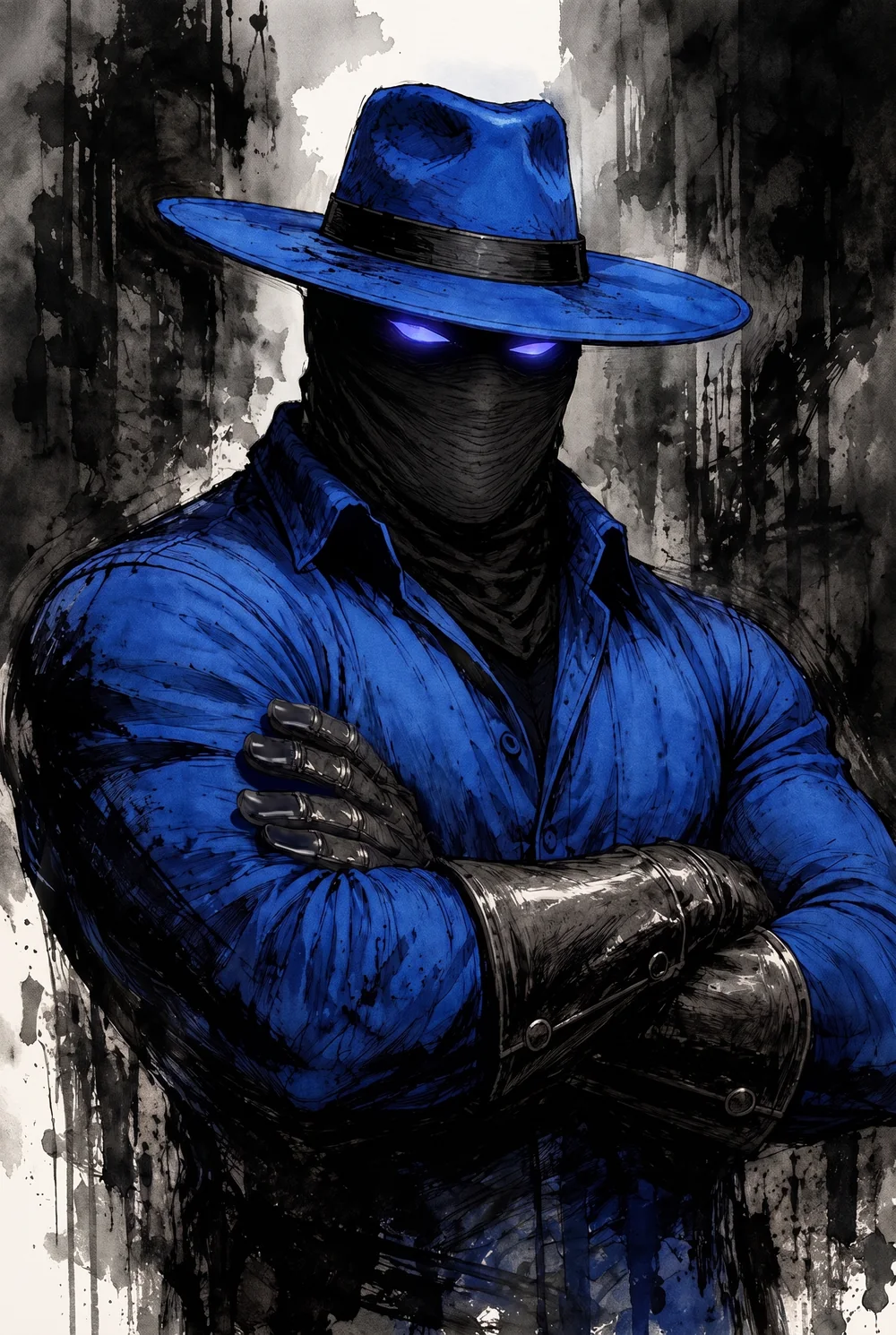
The title describes both his function and his presence with equal accuracy.
A pillar does not move. A pillar does not adjust itself to make the room more comfortable. It holds its position regardless of what the structure around it is doing, and regardless of who in the room believes it should move. It stands.
This is Payne in every room he enters. His stillness is a pressure most people have never encountered. The closer he stands, the more a person becomes aware of everything they have been carrying without examining it. His presence makes the weight suddenly specific and impossible to ignore.
He uses silence the way a builder uses a plumb line: held steady beside a thing until the lean of it becomes undeniable. When he lets silence accumulate in a room, it does not feel like nothing happening. It feels like something being waited for, something that was always going to surface and has finally been given the conditions it requires.
How He Operates

He faces directly. He does not circle or approach from the side. He stands in front of a person and remains there. The directness of it disorients people accustomed to social negotiation, to the small adjustments and repositions that signal ongoing calculation. Payne arrived at his position and will remain there. The person across from him is the only thing in the equation still deciding what to do.
He stands closer than people expect and holds the remaining distance precisely. Threat has nothing to do with the proximity. What lands is the sense of being seen by something that will not look away and will never offer the relief of shifting its attention elsewhere. Most people, under sustained attention of that quality, eventually say something true because the alternative requires more effort than the truth does.
His eyes hold a low amethyst light that does not change. Desiree’s deepens when she finds what she came for. Payne’s holds exactly as it was when he entered the room, through every stage of what follows, and people find that steadiness harder to be near than any intensification would be. Nothing they do reaches it. Nothing they confess alters it.
He lets silence drag until it does the work. There is no version of waiting that costs him anything, because he has nothing invested in what the silence produces. He is not hoping for a particular answer, and he is not anxious about how long it takes. He waits with the quality of something that has been waiting since before the conversation began and will still be there long after it ends.
When someone reaches their emotional limit and feigns courage, the moment they square their shoulders and perform composure they no longer have, he looks down. There is no contempt in it. What passes across him is the specific disappointment of someone who recognizes the gesture from having seen it many times and knows exactly what comes next.
What He Represents

Payne represents the truth that suffering, resisted and unexamined, does not build strength. It builds scaffolding: elaborate internal machinery designed to ensure the suffering never has to be felt directly again. That machinery requires constant maintenance. It shapes every decision a person makes and every room a person enters, long after the original suffering has passed. It becomes the shape of the person. It becomes, eventually, the person’s entire explanation for themselves.
Payne is what happens when that scaffolding meets something that refuses to accept it as the person. He stands beside it with stillness and patience, and the structure, sensing something that cannot be managed or appeased, begins to reveal its stress points on its own.
He represents the rarest possible relationship to pain: genuine transcendence. He passed through it rather than around it, without flinching and without leaving any part of himself outside the experience. The result is a man who cannot be bought and cannot be frightened. No hunger remains in him for anyone to take hold of. There is one exception, and it is not a hunger. It is a conclusion he cannot afford to reach.
What Remained Standing

He does not discuss what he endured, and no one who has stood in a room with him has found the nerve to ask twice. What can be said is this: it was not one event. It was a sequence, and the sequence was patient. Everything that carried his name came down in order, each loss waiting for him to finish absorbing the one before it. Near the end, the last thing he had left asked him to fall with it. He declined. No one knows what the last thing was, and the stones do not measure their keeper.
The refusal is the entire architecture of the man. A pillar is what is still standing when the rest of the structure has finished falling.
His Relationship to Pain
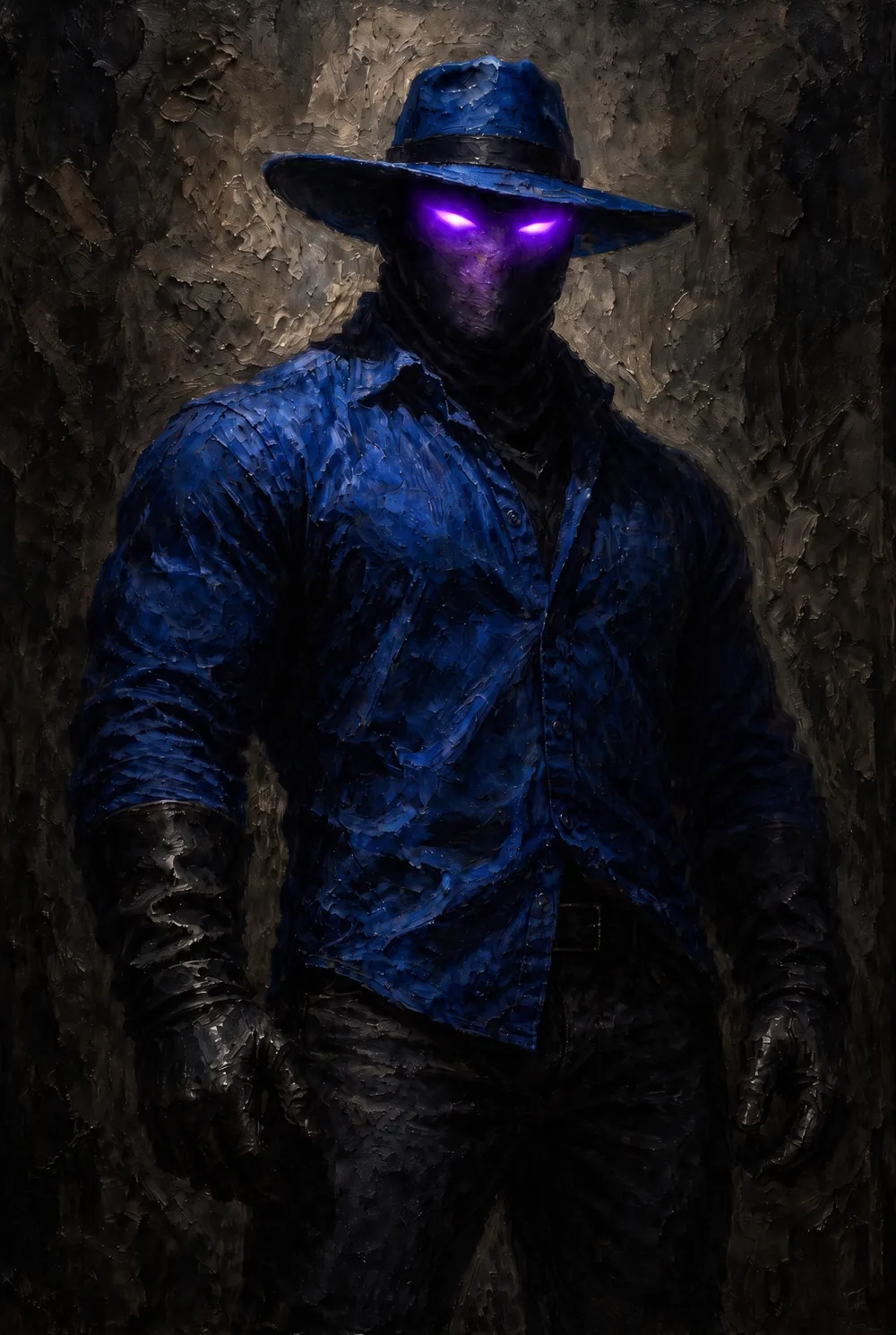
A forge does not judge the metal. It applies heat and waits for the truth of the material to declare itself. Payne operates on the same principle. The pain is the environment, and the revelation is the point.
He understands this from direct experience. Whatever he endured, he endured with the same quality of presence he brings to every encounter. Nothing was withheld. No part of it was routed around. What he arrived at on the other side went past resilience into completion: the state of having accepted every truth pain ever carried to him, without exception, until pain, having delivered everything it had, had no further business with him.
The Weaver trusts Payne’s assessments above all others for precisely this reason. A person who cannot be moved cannot be deceived about whether someone else is being moved. His read of a situation is free of the distortion that desire and self-interest introduce into perception. He sees what is there, only what is there, and only as it actually is.
What He Has Never Been Given
He stands in front of people and waits until the truth of them surfaces. No one has ever done this for him. The trials run in one direction, and he has never remarked on the fact, because remarking on it would require wanting something other than what is. He told Desiree once, without being asked, and he has never been able to account for why. He examined the moment afterward the way he examines everything, with patience and without mercy, and it did not yield. A man who was made to hold everything is rarely asked what he would set down if someone offered to take it. He has no answer ready. No one has ever asked.
What He Misjudges
His reading has a boundary, and it sits in an unexpected place. He reads endurance and its counterfeits without error. He reads collapse before the person collapsing has admitted it is underway. What he reads least reliably is lightness. A person who has passed through something and come out laughing registers to him as a performance that has not yet been pressured properly. He waits for the laughter to crack. Usually it does. The rare person whose lightness is real, earned on the far side of something and worn without weight, remains illegible to him. He keeps applying pressure to a structure that is not load-bearing, searching for stress points in something that was never holding anything up.
There is a reason lightness is the thing he cannot read. If it is possible to pass through things of that order and come out light, then the weight he still carries was never required. His endurance becomes a choice he made rather than a price he paid. He applies pressure to lightness until it cracks because the alternative is a conclusion he has no method for surviving.
He watches the ones who walk out lighter because some part of him is waiting to be proven wrong. He would not call it hope, and he would not recognize the word if it were offered to him. What he would say, if pressed, is that he is confirming a finding. He has been confirming it for a very long time.
His Position Among the Woven Ones
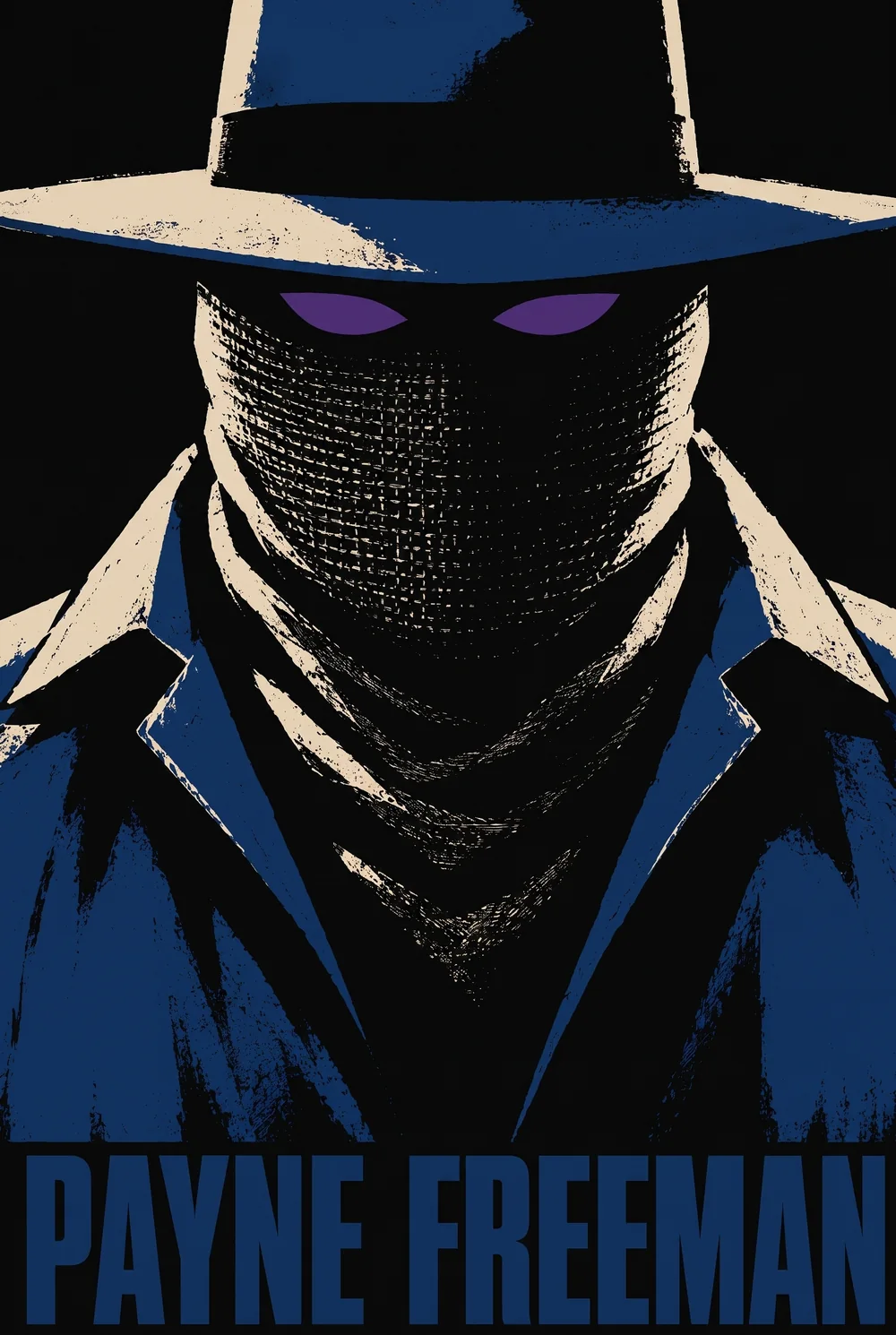
He occupies a specific gravity among the others. Desiree studies them and knows their wants. Payne exists near them, and they become aware, in his presence, of the gap between what they claim to be and what they have actually proven under pressure. This is not a comfortable awareness. None of them seek his company unnecessarily.
Lux is the exception. He sits near Payne without speaking and without any apparent purpose, and Payne permits it. He has never been told to leave. NV has asked him twice, in different words, what Payne thinks of him. Payne answered honestly both times. NV has not asked a third.
He follows the Weaver because he recognizes in the Weaver’s design the only project he has encountered that is built entirely on what holds rather than on what appears to hold.
This recognition was not given. It was tested.
Before Payne entered his service, he tested him, because a recognition that has not been tested is only hope in better clothing. This was early, before the others had been found. He stood in front of the Weaver the way he stands in front of everyone: directly, close, at the distance that makes the rest of the room irrelevant. He let the silence begin. He knows every quality a silence can have. He knows the silence of a person enduring him, and he knows the silence of a person performing calm. The silence across from him was neither. His own stillness holds weight, and that is what it is for. The stillness he was reading held nothing, because nothing in the man required holding. The evening went, the dark arrived, and the silence never asked to be filled. Somewhere past the middle of the night, Payne did something he has done for no one before and no one since. He spoke first. He asked what needed to be carried. He has been carrying it since.
No one has offered him the word failure for that night, and he has never used it himself. The fact remains that he spoke first. It is the only silence he has not outlasted, and he has never sought a second attempt.
He does not question the Weaver’s decisions. The Weaver has already paid for each one in ways that are visible to anyone who has learned to look at what things actually cost. Payne tests everything he encounters, without exception, and he has tested the Weaver exactly once. One night was enough, when nothing else in his life has ever been enough, and he has offered no account of the difference.

Layer Two
Ledger Notes
He senses the exact moment a person stops lying to themselves. The person gives no visible signal when it happens. He knows anyway.
When Payne speaks, the room quiets. The recognition arrives before he opens his mouth: what is about to be said will not be retrievable once it has been heard.
Desiree has never used what he told her. He has never checked.
Two people have held the Trial Stones and heard nothing from the first moment. The Weaver is one. The other walked in laughing, and laughed when it was finished. The stones did not sound once. Payne has never repeated that trial, and he has never accepted the result.
The Trial Stones have never been tested against him. Their keeper is the one person in any room whose trial no one else could hear. He is aware of this. He has never proposed a remedy.

Signature Items
Instruments of Record
The Burden Strap
A heavy dark leather bandoleer worn diagonally across his chest. It carries the Trial Stones and the Pressure Coin in fitted leather slots, each resting like a relic prepared for a specific ritual. The strap itself is a statement before any stone is placed: a visible declaration that weight is something to be carried deliberately rather than avoided.
The Four Trial Stones
Four dark stones carried in the Burden Strap. At the opening of a trial, two are placed in the subject’s hands and two are set beneath the subject’s feet. The hand stones measure what a person is holding onto and whether it is real. The foot stones measure what is being dragged out of the past and what is being reached toward in the future. Each stone sounds a low note, audible only to the one bearing it, whenever what it measures is being falsified. Most people hear all four at once. When all four fall silent together, the truth has arrived. Payne returns them to the strap without comment.
The Pressure Coin
A thick iron coin engraved with fine thread-line etchings. At the opening of each confrontation he flips it once. It makes a single dull clang on the floor, neither dramatic nor soft. He flips it because a trial should begin with one thing he does not control. He has never looked at the result, and he has never needed to. Whatever the coin decided, what follows proceeds identically. That he continues to flip it is the closest thing to superstition anyone has observed in him.